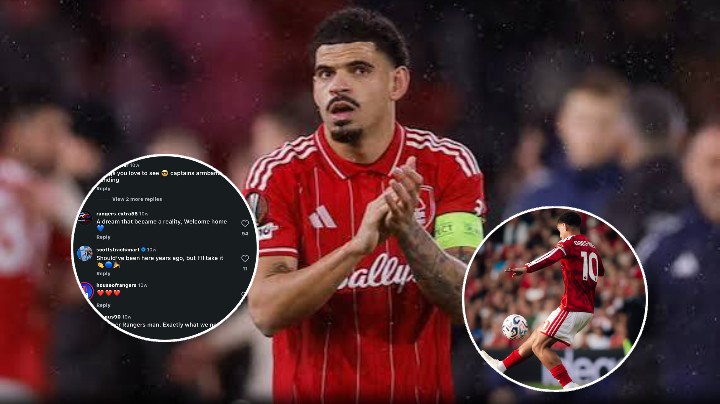
Nottingham Forest captain Morgan Gibbs-White has addressed the frustration surrounding the club’s 1–0 defeat to Coventry City, with the late VAR decision involving Igor Jesus becoming one of the major talking points at the City Ground.
Nottingham Forest were beaten 1–0 by Coventry City on Saturday evening, suffering a frustrating home defeat after Jay Dasilva’s second-half strike settled the Premier League contest.
The result was particularly disappointing for Forest because they created enough pressure to believe they could have taken something from the game. Forest finished with 63 per cent possession and 24 attempts, although only three were on target.
For captain Morgan Gibbs-White, the defeat was made even more difficult by the controversial late intervention that denied Forest what initially appeared to be an equaliser.
VAR drama dominates the aftermath
Forest thought they had rescued a point when substitute Igor Jesus found the net late in the match.
However, referee Jarred Gillett was sent to the pitchside monitor after a VAR review. The goal was subsequently ruled out after Gillett judged that Jesus had fouled Coventry midfielder Caleb Yirenkyi in the build-up.
The decision immediately became the biggest talking point around the City Ground.
Gibbs-White was on the pitch throughout the incident and, as captain, was one of the Forest players attempting to understand the referee’s explanation.
While the precise details of any private conversation between Gibbs-White and Gillett have not been publicly verified, the official explanation was that the decision centred on the foul on Yirenkyi before Jesus completed the move.
That distinction is important because the final decision was not simply about whether Jesus had scored legally from the finish itself. The VAR intervention focused on what happened immediately before the goal.
Forest struggle to turn possession into goals
The defeat also highlighted an issue that has troubled Forest at home early in the campaign.
Forest controlled much of the ball but struggled to turn that dominance into clear-cut opportunities. Coventry, meanwhile, defended in numbers and looked to attack quickly when possession changed hands.
The visitors eventually found their breakthrough in the 55th minute.
Jay Dasilva produced the decisive moment after receiving a long distribution from goalkeeper Carl Rushworth before finishing to put Coventry ahead.
It was a remarkable moment for Coventry, who secured their first Premier League victory since 2001 and their first league goal of the campaign.
The Guardian
Forest then increased the pressure, but Coventry continued to frustrate them.
Gibbs-White’s role becomes even more important
Gibbs-White started as Forest’s captain and operated in the advanced midfield role behind Liam Delap.
His responsibility was to connect midfield with attack, create opportunities and help Forest break down Coventry’s compact defensive structure.
Although Forest had the territorial advantage, Coventry’s defensive organisation made it difficult for Gibbs-White and his teammates to find the final pass.
The statistics underline the contrast between possession and effectiveness. Forest had 24 shots compared with Coventry’s 10, but both teams managed only three efforts on target. Forest also recorded 1.15 expected goals compared with Coventry’s
Those figures show why the result was so frustrating from the home side’s perspective.
A difficult evening for the Forest captain
Gibbs-White’s frustration was visible during the closing stages as Forest pushed desperately for an equaliser.
The midfielder was also booked late in the match after an incident involving a Coventry player, according to the match commentary.
For a captain, those moments underline the emotional pressure of trying to rescue a result in front of the home supporters.
But Forest ultimately had no answer to Coventry’s resistance.
The visitors protected their narrow advantage and secured a historic victory.
What the result means for Forest
The defeat leaves Forest with five points from their opening five Premier League matches, according to the post-match standings. Their record now reads one win, two draws and two defeats.
It is still early in the campaign, but failing to score in the first three league home matches is already a notable concern. The Guardian reported that this is the first time in Forest’s history they have failed to score in each of their opening three home league games of a season.
The Guardian
That makes the responsibility on Gibbs-White and Forest’s other attacking players even greater.
The captain remains central to the team’s creative play, but Forest need their possession and attacking pressure to produce more goals.
Coventry leave the City Ground with history
For Coventry, the evening could hardly have gone better.
Frank Lampard’s side arrived having lost their opening four league matches without scoring, but Dasilva’s goal changed everything.
They defended their lead under sustained pressure and eventually celebrated a famous 1–0 victory.
The result ended Coventry’s 25-year wait for a Premier League victory and gave them their first top-flight goal of the season.
For Forest, however, the focus now turns to how they respond.
Gibbs-White’s leadership will be crucial as the club looks to put the defeat behind them, improve their attacking output and turn dominant performances into points.
The VAR decision will continue to generate discussion, but the bigger lesson for Forest is clear: possession and pressure count for little if they cannot find the decisive moment in front of goal.