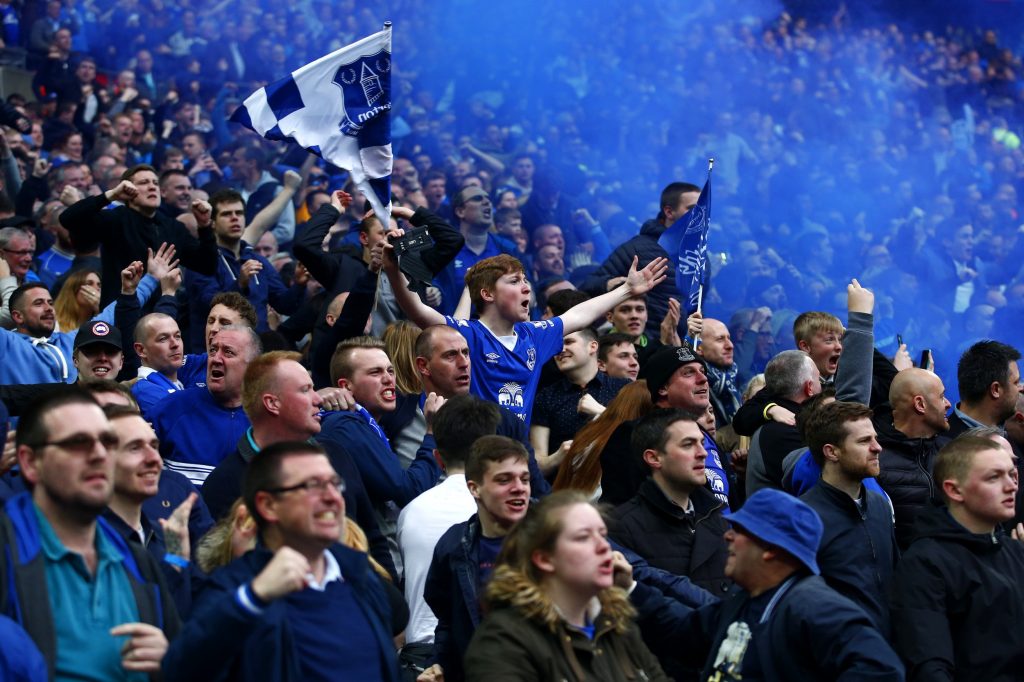
There are nights when sound becomes memory. When a voice, multiplied by thousands, transforms brick and steel into something alive. In those rare moments, loyalty is no longer quiet devotion — it is declaration. It rises from the depths of shared struggle, from generations who have carried identity not as decoration but as duty. The great institutions of English sport are not sustained by trophies alone; they endure because of belief, because of people who travel any distance and sing through any storm.
From Merseyside docks to distant away ends, the spirit of Everton has always been defined by resilience. This is a club built on defiance, on standing tall when seasons grow turbulent, on fighting when circumstances tighten. The blue shirt carries history stitched into every thread — league triumphs, cup glories, and years of hardship faced without surrender. To follow Everton is to understand that pride is not conditional. It is constant. And on a dramatic evening on Tyneside, that pride did not whisper. It roared.
Under the floodlights of Newcastle United’s home, St James’ Park became the stage for one of the most emotionally charged away performances of Everton’s season — a ferocious, end-to-end 3–2 victory that will linger long after the table shifts again.
The match itself was theatre.
Newcastle began with intent, their crowd surging behind them, eager to assert dominance. But Everton absorbed the pressure with composure that hinted at something brewing beneath the surface. In the 19th minute, Jarrad Branthwaite rose above a crowded penalty area and powered home a header that cut through the noise like a blade. The away end exploded — arms raised, voices unleashed, belief ignited.
Newcastle responded through Jacob Ramsey, restoring parity and reigniting the stadium. Momentum swung. The contest tightened. Yet Everton refused to retreat into caution.
Just before the interval, Beto finished a sharp attacking move with icy assurance, restoring the lead and silencing the majority inside St James’ Park. It was not just a goal. It was a statement of nerve.
The second half intensified into something bordering on beautiful disorder. Newcastle pressed relentlessly and found their equaliser through Jacob Murphy’s stunning volley in the 82nd minute. The stadium shook. The script seemed to be tilting toward home glory.
And then came the response.
Barely sixty seconds later, substitute Thierno Barry reacted instinctively inside the area, firing home Everton’s third. The away section descended into absolute bedlam. Bodies collided in celebration. Strangers embraced. Voices rose with raw, unfiltered conviction.
Deep into stoppage time, one final Newcastle surge threatened to steal the moment — until Jordan Pickford produced a reflex save of breathtaking precision. It was defiant. It was decisive. It preserved the 3–2 triumph and sent Everton’s supporters into rapture.
But even beyond the goals and the saves, something else was born that night.
As Barry’s strike rippled the net, a rhythm emerged. A clap. Then another. Then thousands.
A chant — spontaneous, organic, unapologetic — filled the stadium.
It began softly. It ended thunderous.
“We came up north, we weren’t afraid — three goals loud, statement made.”
What followed was not rehearsed. It was instinctive unity.
- A declaration of fearlessness.
- A celebration of resilience.
- A reminder that Everton’s identity travels wherever its supporters go.
Television microphones caught every word as the sound rolled around St James’ Park, refusing to fade. Newcastle fans attempted to answer, but the momentum — both on the pitch and in the stands — belonged to the visitors.
One Everton supporter later described the moment with clarity.
“It wasn’t just a chant. It was release. It was everything we’ve carried this season pouring out at once.”
That is what made it powerful.
This was not merely about defeating Newcastle. It was about answering pressure with courage. Twice pegged back, Everton did not fracture. They responded instantly, almost provocatively, as if daring adversity to strike again.
The performance underlined growth:
- Branthwaite’s authority in the air.
- Beto’s composure in decisive moments.
- Barry’s fearless impact off the bench.
- Pickford’s ice-cold intervention when it mattered most.
It was structured, intelligent, and emotionally charged without descending into recklessness.
And as the final whistle sounded, players turned toward the away end — applauding not just the support, but the statement.
Because what echoed around England the next morning was not simply the result.
It was belief.
Clips of the chant flooded social platforms. Commentators replayed it. Rival fans acknowledged — sometimes reluctantly — the sheer volume and unity displayed. In an era where narratives shift quickly, Everton had seized one.
“That’s what this club is,” a former player observed afterward. “You can doubt us. You can question us. But when we stand together, we are impossible to ignore.”
There was something almost mysterious about the way the sound lingered. Through concourses, down stairwells, into the cold Tyneside air — it refused to dissipate. It followed supporters home, replayed in memory long after the floodlights dimmed.
Three points will shape the league table.
But this night shaped something deeper.
It reinforced the values that have sustained Everton through triumph and turbulence alike: unity, pride, and an unbreakable sense of belonging.
On this unforgettable evening at St James’ Park, Everton did more than win 3–2.
They turned a stadium hostile into a stage conquered.
They unleashed a chant that carried defiance in every syllable.
And as its echoes continue to ripple from Tyneside to Merseyside, one truth feels undeniable:
When Everton fight together — on the pitch and in the stands — their voice does not fade.
It reverberates.
