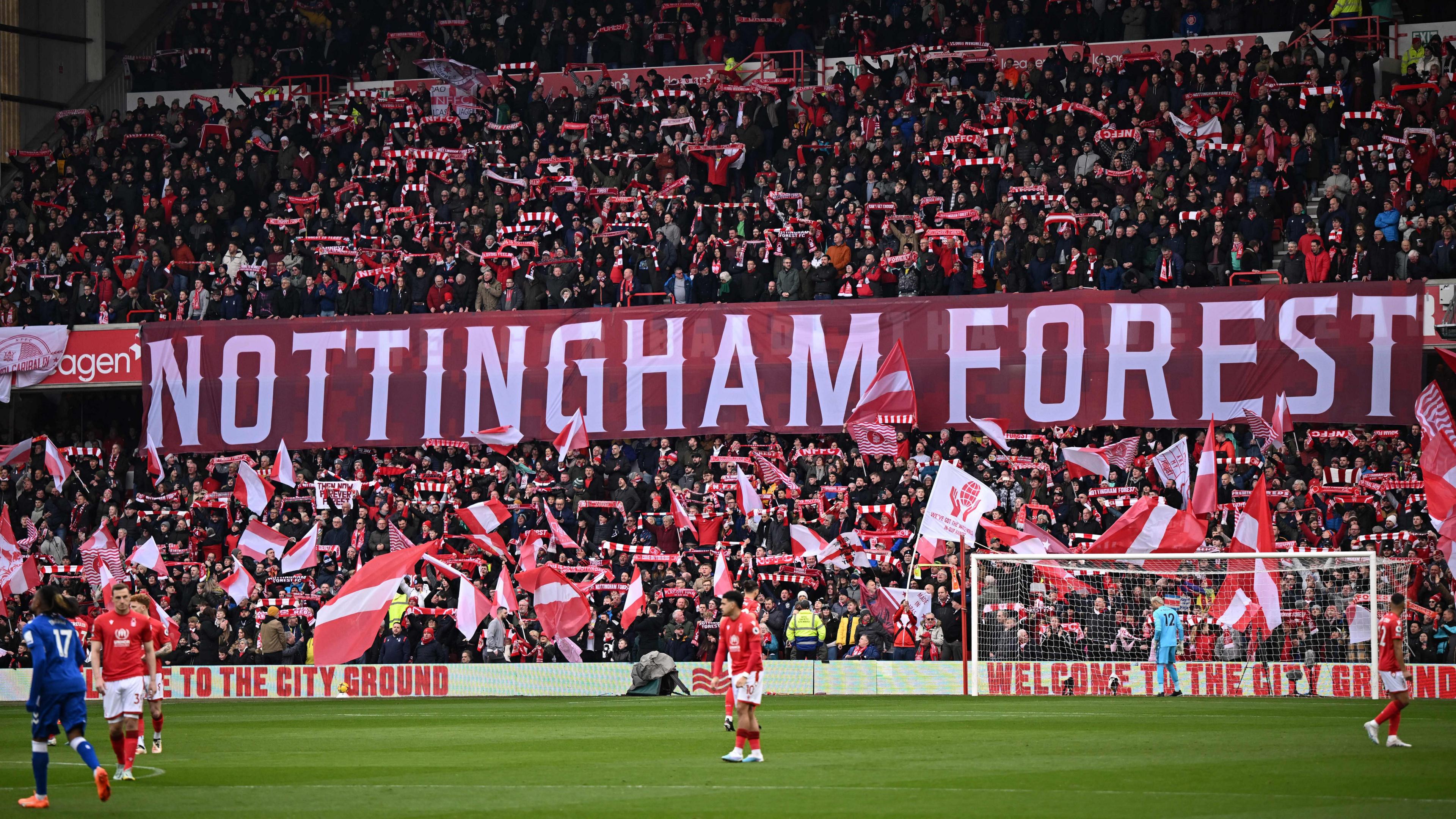
There are institutions that live quietly in history books, and then there are clubs that breathe through their people. Nottingham Forest belongs firmly to the latter. Its soul is stitched into red scarves soaked by rain, into generational memories whispered on the walk to the City Ground, into a belief system built on endurance, revival, and defiance. This is a club that has known exile and ecstasy, collapse and coronation, yet never lost its sense of self.
For Forest supporters, identity has always mattered as much as results. The club’s traditions are rooted in patience, loyalty, and a deep respect for legacy. European nights are not fantasies here—they are memories. They live in grainy footage, in stories told by fathers and grandfathers, in the quiet conviction that greatness, once earned, can be found again. And when destiny stirs, it rarely does so without turmoil, sacrifice, and consequence.
That sense of consequence has now arrived.
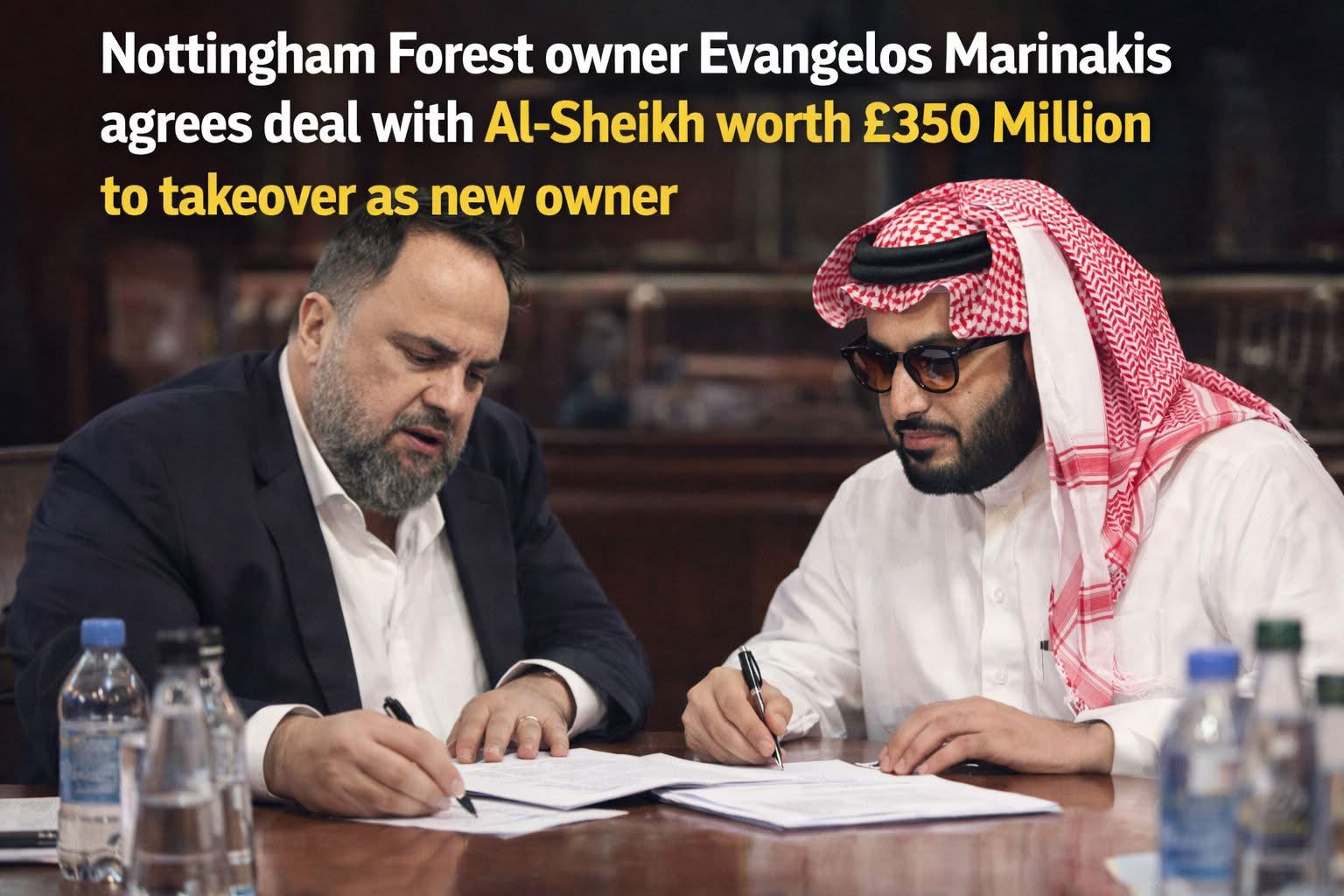
Evangelos Marinakis has taken a dramatic and calculated step by relinquishing his controlling stake in Nottingham Forest ahead of a potential return to European competition. It is a move born not of retreat, but of necessity, designed to navigate UEFA’s uncompromising rules on multi-club ownership at a moment when Forest stand on the brink of something historic.
Marinakis, who also owns Greek giants Olympiacos, finds himself at the centre of a regulatory crossroads. With Olympiacos already qualified for the UEFA Champions League, Forest’s surge toward Europe has triggered a high-stakes conflict of interest storm. UEFA regulations are clear and ruthless: no individual may exercise decisive influence over two clubs competing in the same European tournament.
Rather than risk sanctions, humiliation, or exclusion, Marinakis has placed his Forest shares into a blind trust—a surgical withdrawal of power, not an exit. Control is paused, influence muted, authority surrendered temporarily so that the club’s ambitions remain alive. It is a silent sacrifice, one that speaks volumes about priorities.
“This is not abandonment,” sources close to the situation insist. “It is protection—of the club, its integrity, and its future.”
The move mirrors precedents already accepted across Europe, where regulatory compliance has become a battleground of modern football. Multi-club ownership is no longer the exception, but UEFA’s insistence on competitive purity remains immovable. Marinakis has chosen compliance over chaos, structure over scandal.
What makes this moment heavier is the timing. Forest are no longer looking down the table in fear—they are looking up in belief. Under the guidance of Nuno Espirito Santo, the club has transformed from survival mode into a genuine contender. Defensive steel, tactical clarity, and renewed confidence have reshaped the narrative.
With matches remaining and momentum building, Forest have placed themselves within touching distance of the Champions League. A single result can tilt destiny. One night can rewrite decades. And suddenly, the echoes of 1979 and 1980 no longer feel distant—they feel dangerously close.
“This team plays with memory,” one observer noted. “You can feel the weight of history pushing them forward.”
- From relegation fears to elite contention in a matter of seasons
- From fractured identity to tactical coherence
- From forgotten European force to a name whispered again in continental corridors
The emotional gravity of this run cannot be overstated. Forest last tasted European football in the mid-1990s. The Champions League anthem has not echoed through the City Ground since the early 1980s. For supporters who waited decades just to return to the Premier League, this moment feels almost unreal.
Marinakis’ investment laid the foundations for this ascent—recruitment, infrastructure, ambition. Stepping back now does not erase that influence; it amplifies it. This is ownership choosing the club over control, the dream over dominance.
Governance continuity remains intact. Sokratis Kominakis is expected to return to the board, ensuring stability while the blind trust remains in place. Day-to-day operations will continue uninterrupted. The players remain insulated from boardroom turbulence. The focus is singular.
“What matters now is the pitch,” a club source said. “Everything else is noise.”
And yet, it is impossible to ignore the symbolism. Power relinquished at the peak of ambition. Risk embraced to preserve opportunity. This is the modern football paradox—where dreams must first survive the rulebook before they can conquer the continent.
- No shortcuts
- No regulatory loopholes
- No excuses if the dream is realized
As the season edges toward its climax, anticipation grips Nottingham. Every fixture feels loaded. Every whistle sounds louder. European nights are no longer a romantic memory—they are a looming possibility.
Marinakis has stepped back so Forest can step forward. Whether the journey ends in Champions League glory or simply in pride restored, this season has already carved itself into club folklore.
And if Europe does return to the City Ground, it will arrive not through defiance—but through discipline, sacrifice, and belief.

